Introduction:
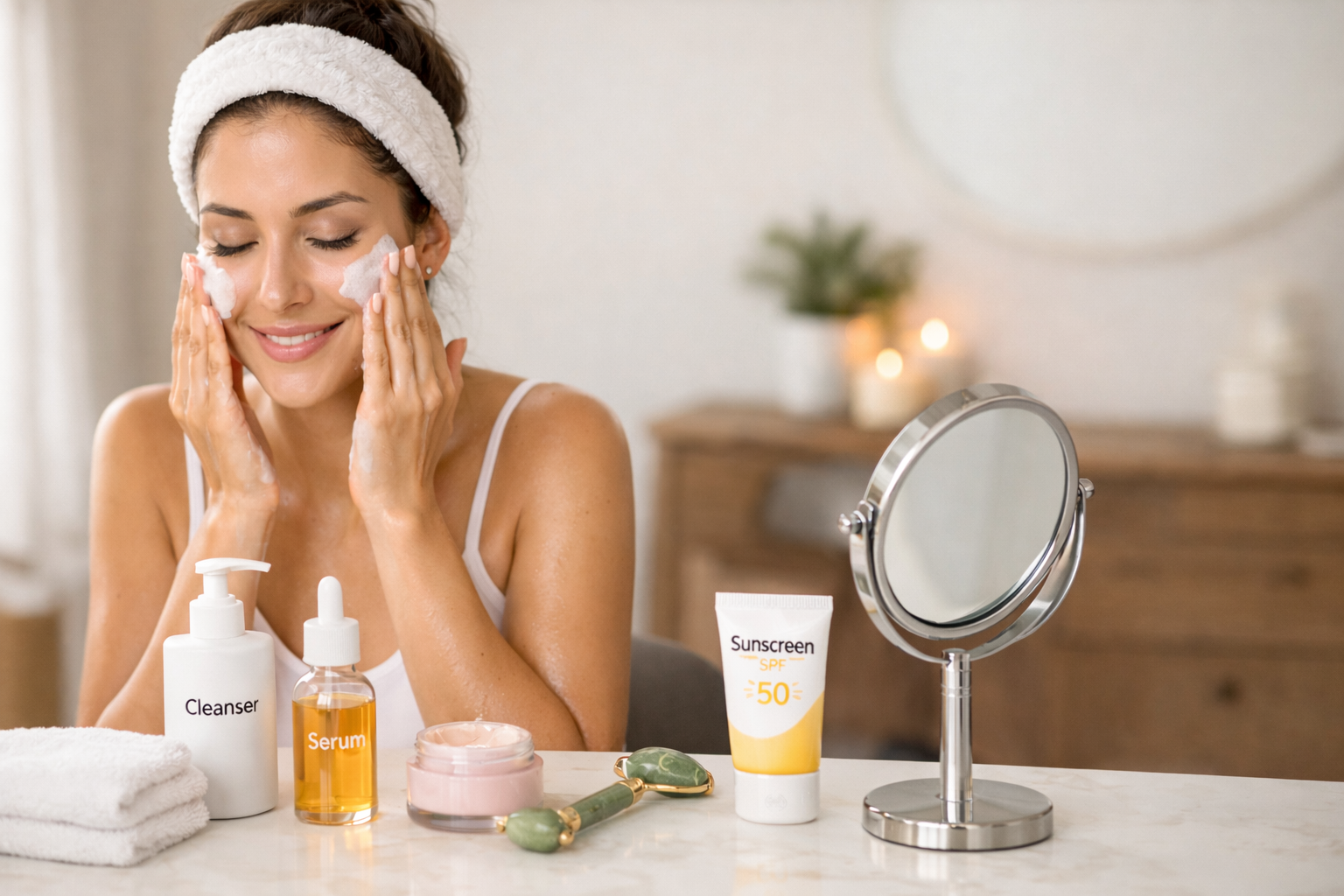
If you’ve ever felt overwhelmed by all the skincare products out there, you’re not alone. Standing in front of a shelf of cleansers, serums, and creams can be confusing – what do you really need, and in what order? The good news is that creating a skincare routine doesn’t have to be complicated. Think of it as giving your skin the daily love and care it deserves, just like brushing your teeth or combing your hair. In this step-by-step guide, we’ll walk you through how to build an easy, effective skincare routine from scratch. The tone is friendly and practical – as if you’re chatting with a trusted friend who’s sharing honest skincare tips. By the end, you’ll know exactly what to do each morning and night to keep your skin clean, hydrated, and protected for that healthy, radiant glow. Let’s dive in!
Skincare 101: Why a Routine Matters
Before we get into the “how,” let’s quickly talk about why skincare is important. Your skin is your body’s largest organ and its first line of defense against the environment. Daily exposure to sun, pollution, makeup, and dirt can take a toll. A consistent skincare routine helps give your skin the nourishment and protection it needs to stay healthy and glowing. Regular care can minimize dryness, reduce breakouts, and even slow down signs of aging over time. Plus, taking care of your skin just feels good – it can be a relaxing form of self-care at the start and end of your day.
At its core, a good skincare routine only needs a few key steps: cleansing, moisturizing, and sun protection (sunscreen). Everything else (like toners, serums, masks, etc.) is additional, based on your personal skin needs. In fact, dermatologists agree that a basic routine for beginners has three essential components: a cleanser, a moisturizer, and a treatment product – and always sunscreen during the day. Don’t worry, we’ll explain each of these in detail. The goal is to keep it simple and effective.
(Quick overview:) At minimum, you should cleanse your face, keep it hydrated with a moisturizer, and protect it from the sun. Once you have those down, you can add other products (like serums or exfoliants) to target specific concerns. Remember, consistency is key – caring for your skin every day will yield far better results than an elaborate routine you only do occasionally.
Before You Start: Know Your Skin Type
One of the first things to do when building a skincare routine is to understand your own skin. Knowing your skin type (and any specific concerns) will help you choose the right products that match your skin’s needs. Using products formulated for your skin type will make a big difference in how effective – and gentle – your routine is. Here are the common skin types and how to identify yours:
-
Oily Skin: Your skin produces excess oil (sebum), causing a persistent shine, larger-looking pores, and frequent acne or blackheads. Makeup might slide off during the day. If you often notice your face becoming greasy by midday, you likely have oily skin.
-
Dry Skin: Your skin often feels tight or flaky, especially after cleansing. You might experience rough patches or itchiness. Dry skin produces less natural oil, so it can look dull or feel rough without enough moisturizer. If your skin soaks up moisturizer and still feels a bit parched, you’re probably on the dry side.
-
Combination Skin: This is a mix of oily and dry. Typically, combination skin means you have an oily T-zone (forehead, nose, chin) but dry or normal cheeks. Many people fall into this category. You might notice shine and occasional breakouts in the T-zone, while other areas feel normal or even dry.
-
Sensitive Skin: Your skin is easily irritated and may react with redness, stinging, or rashes to certain products or weather changes. Sensitive skin can be oily, dry, or combination as well, but its hallmark is that it needs extra-gentle care. Fragrance or harsh ingredients often trigger irritation if you have sensitive skin.
-
Normal Skin: “Normal” just means your skin is generally balanced – not too oily, not too dry, with minimal sensitivity. Lucky you! Even normal skin benefits from a routine to keep it healthy, but you typically won’t have extreme issues in any area.
How to use this info: Once you know your skin type, choose products tailored to it. For example, if you have oily or acne-prone skin, you might opt for a lightweight gel or foaming cleanser that removes excess oil, and an oil-free moisturizer that won’t clog pores. If your skin is dry, you’ll want a creamy, hydrating cleanser and a richer moisturizer to lock in moisture. Sensitive skin types should look for fragrance-free, hypoallergenic products with soothing ingredients. Using the right products for your skin type will help your skin look and feel its best.
Summary (Skin Type): Pick products that suit your skin. Oily skin often needs oil-free or gel formulas, dry skin craves richer hydration, and sensitive skin benefits from gentle, simple ingredient lists. The better your products match your skin’s needs, the happier your skin will be!
Now that you’ve identified your skin type, let’s get into the actual routine, step by step.
Step 1: Cleanse – Start with a Fresh Canvas
Cleansing is the foundation of any skincare routine – it’s the step that clears away the dirt, oil, sweat, and makeup that accumulate on your face. If you do nothing else, washing your face is a must. Imagine trying to apply moisturizer or serum onto dirty skin; it wouldn’t absorb well and could even trap impurities. Clean skin is like a fresh canvas for the rest of your products.
How to Cleanse: Use a gentle facial cleanser that suits your skin type. Splash your face with lukewarm (not hot) water and apply the cleanser using your fingertips, massaging in circular motions – be gentle, no scrubbing with rough washcloths or harsh exfoliants here. Take about 30 seconds to a minute to cleanse all over (forehead, nose, cheeks, chin, and don’t forget your jawline). Then rinse thoroughly with lukewarm water. Finally, pat (don’t rub) your skin dry with a clean, soft towel. Gentleness is key; over-scrubbing or using water that’s too hot can irritate your skin and strip away its natural moisture.
Most dermatologists recommend washing your face twice a day – in the morning and at night. Here’s why:
-
Morning: While you sleep, sweat and oils can build up on your skin, and your pillowcase might have some bacteria. A quick morning cleanse refreshes your face, removing any nighttime grime so you start the day clean. It also preps your skin for any products (like moisturizer or sunscreen) you’ll apply.
-
Night: Cleansing at night is non-negotiable, especially if you wear makeup or sunscreen during the day. Throughout the day, your face accumulates makeup, oil, dirt, and pollution. Washing it off every evening keeps your pores from getting clogged and helps prevent breakouts. If you leave makeup on overnight, it can mix with oil and bacteria to cause acne – and even accelerate skin aging while you sleep. So, grab that cleanser each evening to give your skin a fresh start before bed.
Makeup Removal Tip: If you wear heavy makeup or waterproof sunscreen, consider “double cleansing” at night. This means using a dedicated makeup remover or an oil-based cleanser first to dissolve makeup and sunscreen, then following up with your regular gentle cleanser to clean your skin itself. For example, you could use micellar water or a cleansing oil/balm to take off foundation, mascara, etc., and then do your normal cleanse. This two-step cleanse ensures all the gunk is gone without overly scrubbing your face. After a proper cleanse, your skin should feel clean but not overly tight or dry. If it feels squeaky and very tight, your cleanser might be too harsh – switch to something more gentle or hydrating in that case.
-
Frequency: Generally, cleanse twice daily (morning and night). If you work out or sweat a lot during the day, it’s a good idea to wash your face afterward as well. Sweat can mix with dirt and trigger breakouts, so a quick post-exercise cleanse helps keep skin clear. Just use a mild cleanser and cool water if you need a mid-day wash.
-
Don’t overdo it: Washing more than two times a day (except after heavy sweating) usually isn’t necessary and could dry out your skin. Also, avoid harsh scrubbing tools or gritty scrubs daily – scrubbing can irritate your skin and actually make issues like acne worse, not better. Trust the gentle approach; your skin will thank you.
Quick Cleansing Tips (Summary):
Use a gentle cleanser suited to your skin type (gel for oily, cream for dry, etc.).
Wash twice a day – when you wake up and before bed – and always remove makeup at night.
Be gentle: no rough scrubbing or scalding-hot water. Gently massage cleanser with fingertips, rinse, and pat dry.
Double cleanse in the evening if you wear makeup or heavy sunscreen, to thoroughly clean your skin.
After intense sweating, do a quick cleanse to clear perspiration and bacteria.
Now that your skin is fresh and clean, it’s ready to receive the benefits of the next steps in your routine.
Step 2: Tone (Optional) – The Refreshing Extra
Toner is a skincare step that often confuses people – do you really need it? The answer: it depends. Toners are like a bonus step after cleansing, meant to gently refresh your skin, remove any last traces of impurities, and prep your face for better absorption of serums and moisturizer. In the past, toners were mainly astringent (think old-school alcohol-based toners that could be harsh and drying). Nowadays, toners come in many varieties, and a lot of them are alcohol-free and hydrating, focusing on soothing the skin. This step is optional, but if you pick the right toner, it can add a nice boost to your routine.
What does a toner do? A toner is a liquid that you apply right after cleansing (and patting your face dry). It can help sweep away any residual dirt or cleanser that water might have missed. More importantly, today’s toners often contain beneficial ingredients to hydrate, calm, or gently exfoliate the skin. For example, you might find:
-
Hydrating toners with ingredients like glycerin or hyaluronic acid to draw moisture into the skin (great for dry or sensitive skin).
-
Calming toners with ingredients such as rosewater, chamomile, or aloe vera to soothe redness and irritation (nice for sensitive or irritated skin).
-
Exfoliating toners with a small amount of chemical exfoliants like salicylic acid or glycolic acid. These can help keep pores clear and brighten the skin, which is useful for oily or acne-prone skin. (If you use an exfoliating toner, be careful not to pair it with too many other exfoliants in your routine to avoid overdoing it – more on exfoliation in a later section.)
How to use: After cleansing, pour a little toner onto a cotton pad or into your clean hands. If using a cotton pad, gently swipe it over your face (avoiding the eye area) to apply the toner and pick up leftover debris. If using your hands, you can pat the toner onto your skin. You’ll feel an immediate refreshing, soothing effect. There’s no need to rinse off a toner – let it sink in. It only takes seconds, and your skin will be primed for the next steps.
If you’re a beginner or have a very minimal routine, you can skip toner and still have great results. But if you’d like that extra fresh feeling or targeted benefits (like oil control or added hydration), a toner can be a nice addition. Just choose one that’s appropriate for your skin (for instance, an alcohol-free, hydrating toner for dry/sensitive skin, or maybe a mild exfoliating toner for oily skin that gets congested).
Note: If your cleanser is very gentle and leaves your skin comfortable, toner isn’t a must-do step. It’s truly optional. On the other hand, if your skin tends to get oily buildup or you want every trace of makeup gone, a toner can ensure your skin is ultra-clean without over-washing. Some people also enjoy facial mists, which are essentially toners in a spray form that you can spritz on for hydration throughout the day.
Toner Takeaways (Summary):
Toner is applied after cleansing to remove residual impurities and prep the skin. It’s helpful but optional for most people.
Choose a toner based on your needs: hydrating toners for dryness, soothing toners for sensitivity, or exfoliating toners for oiliness/acne (use with care).
Apply with a cotton pad or pat on with hands; no need to rinse. It should leave your skin feeling refreshed and ready for serum/moisturizer.
Step 3: Treat – Serums and Targeted Treatments for Your Skin’s Needs
Here’s where you customize your routine to your skin concerns. After cleansing (and toning, if you do that), your skin is like a blank canvas ready to absorb potent ingredients. Serums and treatments are lightweight products formulated to deliver powerful ingredients deep into the skin. This step addresses specific issues like dryness, fine lines, dark spots, or acne. Think of serums as the “problem-solvers” or “boosters” of your routine.
What is a serum? A serum is usually a thin, fast-absorbing liquid or gel packed with high concentrations of active ingredients. You apply it to clean skin so it can penetrate effectively. There are serums for just about every skin goal: hydrating serums, vitamin C serums for brightness, niacinamide for pores and redness, retinol for anti-aging, salicylic acid for acne, and so on. You do not need all of these! You can pick one or two serums that align with what you want to improve. For beginners, often one serum is enough to start.
Common serums and treatments and what they do (choose based on your needs):
-
Hydrating Serum (e.g., Hyaluronic Acid): Draws moisture into the skin, plumping it up and reducing flakiness. Great for dehydrated or dry skin, and even oily skin can use hydration. These serums make your skin instantly feel more supple.
-
Vitamin C Serum: A morning favorite for many. Vitamin C is an antioxidant that brightens your complexion, helps fade dark spots over time, and can boost your skin’s defenses against sun damage (it pairs well under sunscreen). If you have uneven skin tone or dullness, a vitamin C serum in the AM can help skin look more radiant.
-
Niacinamide Serum: Niacinamide (vitamin B3) is a versatile ingredient that helps with enlarged pores, uneven tone, and strengthening the skin barrier. It also can help calm redness and control excess oil. It’s gentle and works for most skin types – a nice “all-purpose” improvement ingredient.
-
Acne Treatment (e.g., Salicylic Acid or Benzoyl Peroxide): If you’re dealing with breakouts, you might use a spot treatment or acne serum. Salicylic acid (a BHA) is great for acne-prone skin because it exfoliates inside pores to keep them clear. Benzoyl peroxide kills acne-causing bacteria. Typically, you’d apply these only on problem areas. For example, a thin layer of salicylic acid gel on your T-zone if you get blackheads, or a dab of benzoyl peroxide on a pimple to shrink it. (Be careful: benzoyl peroxide can bleach fabrics, so use white pillowcases or apply only once it’s fully absorbed!)
-
Retinol or Retinoid: Retinol (vitamin A) is the gold-standard for anti-aging and also helps with acne. It speeds up cell turnover, which can reduce fine lines, improve texture, and unclog pores. Retinol is usually used at night because it can make your skin more sun-sensitive. If you decide to use a retinol cream or serum, start slow (e.g. twice a week at first) to let your skin adjust, because it can cause some dryness or irritation initially. This is a powerful ingredient for long-term skin benefits (many swear by it for keeping skin youthful), but it requires patience and diligent sunscreen use in the day.
-
Eye Cream: This is a targeted product for the delicate skin around your eyes. If you have concerns like dark circles, puffiness, or fine lines (crow’s feet), an eye cream can be applied at this stage (either after your serum or instead of serum specifically on the eye area). It’s usually a gentler formula. Using your ring finger, tap a tiny amount of eye cream along the orbital bone (the bony area around the eye) – be very gentle, as pulling or tugging can contribute to wrinkles. Eye cream is optional, but some women love it as that area can show early signs of aging. Even simply keeping it moisturized can make eyes look brighter.
Layering treatments: If you have multiple serums, apply thinner, water-based ones first, and thicker or oil-based ones after (this ensures absorption). However, applying too many at once can dilute their effectiveness or irritate your skin. A good rule of thumb is to not layer more than 2 serums in one routine (especially as a beginner). Often, one well-chosen serum is plenty. You can use one in the morning and a different one at night if you have multiple goals. For instance, you might do a vitamin C serum in the morning for glow and protection, and a retinol at night for renewal.
Always follow the instructions for any active treatments – some (like strong exfoliating acids or retinoids) might not be used daily at first. And remember: if a product stings, causes redness, or breaks you out, stop using it. Not every product works for everyone.
Patience is key: Many treatments, especially ones for acne or anti-aging, take time to show results. It might be a few weeks (often 4-8 weeks) before you notice a significant difference. Dermatologists say unless a product is clearly irritating your skin, give it at least a month of consistent use to gauge results. Using a product regularly is important – applying a serum sporadically won’t give the desired effect. So stick with your chosen treatment for a while and resist switching products every few days. Consistency will reward you with better skin over time.
How to apply serums/treatments: After cleansing (and toning), while your face is still slightly damp is a great time (damp skin can enhance absorption for hydrating products). Take a few drops of serum or a pea-sized amount of treatment, and gently smooth it over your face (and neck, if needed). For spot treatments (like acne spot cream), just dab on the specific blemish. Let serums sink in for a minute or two before moving to the next step. You don’t need to fan your face or anything; just let it naturally absorb.
Treatment Tips (Summary):
Target your concerns: Pick a serum or treatment that addresses your main skin goal (e.g. vitamin C for brightening, hyaluronic acid for hydration, salicylic acid for breakouts). You don’t need a dozen – start with one good serum.
Apply after cleansing (and toning): This ensures maximum absorption of those active ingredients. If you use multiple serums, layer from thinnest to thickest.
Be consistent and patient: Use your treatment regularly (daily or as directed) and give it a few weeks to work. Avoid introducing too many new actives at once – add one at a time so you can see how your skin reacts.
Gentle around the eyes: If using eye cream, tap it on lightly with your ring finger (the weakest finger) to avoid tugging that delicate skin.
Patch test when unsure: If you’re trying a strong active (like retinol or an acid) for the first time, do a patch test on a small area of skin to ensure you don’t react badly. And when in doubt, less is more – you can always increase usage as your skin builds tolerance.
By now, your skin has been cleansed and treated. Next, we lock in all that goodness with moisture and protect it from the elements.
Step 4: Moisturize – Hydrate and Nourish Your Skin
Every skin type – yes, even oily skin – needs moisturizer. Think of moisturizer as giving your skin a drink of water and sealing that hydration in. When your skin is well-moisturized, it’s smoother, plumper, and more resilient. Skipping moisturizer can lead to dryness, irritation, or your skin overcompensating by producing even more oil if it’s oily skin. The key is to choose a moisturizer that suits your skin type and use it consistently.
Why moisturize? Throughout the day, your skin loses moisture. Cleansing, while necessary, can also remove some of the natural oils and hydration from the skin’s surface. Moisturizer helps to replenish water and oil to keep the skin’s barrier healthy. A healthy skin barrier (the outermost layer of skin) is like a strong wall – it keeps the good things in (moisture) and the bad things out (irritants and germs). If that barrier gets dried out or damaged, you’ll experience flakiness, sensitivity, or breakouts more easily. Regular moisturizing prevents that by keeping your skin balanced and comfortable.
Choosing a moisturizer: Here’s what to look for based on skin type:
-
Dry Skin: Go for a thicker cream or a balm. Look for ingredients like glycerin, hyaluronic acid, ceramides, and natural oils or butters. These will deeply hydrate and form a protective layer to prevent water loss. A rich moisturizer applied at night can do wonders for dry, flaky skin – you’ll wake up with a softer complexion.
-
Oily or Acne-Prone Skin: Choose a lightweight, oil-free lotion or gel moisturizer. Non-comedogenic (won’t clog pores) is a must. Ingredients like aloe vera, hyaluronic acid, or gel-cream formulas provide hydration without heaviness. Avoid heavy creams that might feel greasy. Even if you’re oily, don’t skip moisturizer – keeping skin hydrated actually helps regulate oil production (remember, hydrated skin is healthy skin!). Many people find their oily skin becomes less greasy when they consistently moisturize, because the skin isn’t panicking from being stripped dry.
-
Combination Skin: You might use a lighter moisturizer overall, or even multi-moisturize (a light lotion on the oily areas, and a slightly creamier one on the dry areas). But generally, a medium-weight moisturizer or gel-cream that balances hydration works for combo skin. Ingredients like niacinamide can help normalize oil production while still moisturizing.
-
Sensitive Skin: Look for gentle, fragrance-free formulations with soothing ingredients (like chamomile, colloidal oatmeal, or ceramides). Avoid moisturizers with too many active ingredients or perfumes. Simpler is better to avoid reactions. A hypoallergenic cream that focuses on repairing the skin barrier will help reduce sensitivity over time.
You might find you prefer a lighter moisturizer for daytime and a heavier one at night, and that’s perfectly fine. In the morning, something that absorbs well and sits nicely under makeup (if you wear it) is ideal. At night, you can slather on a more emollient cream since it can work overnight to deeply hydrate.
When and how to moisturize: Apply moisturizer twice a day – once in the morning and once at night, after your serums/treatments. At night, it helps repair and replenish your skin as you sleep. In the morning, it hydrates and preps your skin for the day (and for makeup, if you use any, so it goes on smoothly). To apply, take a nickel-sized dollop (more if your skin is very dry, less if very oily) and gently massage it into your face using upward circular motions. Don’t forget your neck! The neck often gets the same environmental exposure as your face and can benefit from moisture and care. Also, a pro-tip: whatever is left on your hands, rub it into the back of your hands – they need love too and will stay softer with any extra moisturizer.
Many moisturizers also come with added bonuses like antioxidants or minor SPF. If your daytime moisturizer contains at least SPF 30 and broad-spectrum protection, you might not need a separate sunscreen (we’ll talk more about sunscreen next). However, if it’s lower SPF or you prefer using a dedicated sunscreen, simply use a regular moisturizer, then apply sunscreen on top.
Moisturizer and oily skin myth: If you have oily skin, you might be tempted to skip moisturizer thinking it will make you greasy. Actually, not moisturizing can trigger your skin to produce more oil because it feels dehydrated. The key is choosing a lightweight moisturizer. As one skincare advice states, “it’s a good idea to moisturize even if you have oily or combination skin — hydrated skin is healthy skin!”. When your skin is properly hydrated, it often becomes less oily and acne-prone over time, since the skin barrier is intact and not sending SOS signals for moisture.
Moisturizing Musts (Summary):
Moisturize morning and night to keep skin hydrated, soft, and resilient. Apply after serums/treatments to seal in those ingredients.
All skin types need moisturizer: Dry skin benefits from rich creams; oily skin does best with oil-free lotions or gels (but still needs hydration). Choose non-comedogenic formulas if you’re acne-prone.
Apply gently: Use an upward, circular motion to massage in your moisturizer. Don’t neglect the neck and jawline.
Adjust for day/night: Lighter moisturizer (or moisturizer with SPF) in the day, and a nourishing cream at night to help repair skin.
Listen to your skin: If your face still feels tight or flaky after moisturizing, you might need a more hydrating formula or an extra layer. If it feels greasy, scale back the amount or switch to a lighter product. The right moisturizer should make your skin feel comfortably supple, not oily or parched.
With cleansing, treating, and moisturizing done, we have one absolutely critical step left for the daytime – protecting all your hard work with sunscreen.
Step 5: Protect – Sunscreen, Your Skin’s Best Friend (Seriously!)
If there is one step that people tend to skip but absolutely shouldn’t, it’s sunscreen. Wearing sunscreen daily is often called the best anti-aging and anti-damage move you can make for your skin – and it’s true. Sun exposure (specifically UVA and UVB rays) is responsible for a huge amount of skin aging (wrinkles, sun spots, loss of elasticity) and of course, skin cancer risk. The great news is that protecting your skin from the sun can dramatically slow down these aging effects and keep your skin healthier long-term. Think of sunscreen as the shield that keeps all the benefits of your skincare routine locked in and the environmental harm out.
Dermatologists often say, “Sunscreen is the closest thing we have to a fountain of youth.” It really can slow down skin aging and help prevent skin cancer. So, even if you’re indoors most of the day or it’s cloudy, make sunscreen a daily habit. UV rays can penetrate windows and clouds, so unless you’re in a windowless cave, your skin catches some rays when it’s daylight.
What to use: Look for a broad-spectrum sunscreen with at least SPF 30 (broad-spectrum means it protects against both UVA and aging rays and UVB the burning rays). SPF 30 filters out about 97% of UVB rays; higher SPFs block slightly more (SPF 50 blocks ~98%). Higher SPF can be helpful if you’re very sun sensitive, but anything 30 or above is generally fine for daily use as long as you apply it properly. Also consider your skin type and preferences: there are lightweight fluid sunscreens for oily skin, moisturizing sunscreens with added hydrators for dry skin, and mineral or “sensitive” formulas with zinc oxide or titanium dioxide if chemical sunscreens irritate you.
How to apply: Sunscreen should be the last step of your morning skincare routine (before makeup, if you wear makeup). If your moisturizer doesn’t contain SPF, apply your regular moisturizer first, let it sink in for a minute, then apply sunscreen generously on top. Make sure to cover all exposed areas: your entire face (don’t forget the hairline and around the eyes – some sunscreens are formulated to not sting eyes), your neck, and even your ears if they’ll be exposed. A common guideline is to use about a nickel or quarter-sized amount for your face and neck combined, or the “two finger rule” (a line of sunscreen down the length of your index and middle finger) as an easy measure. Most people under-apply sunscreen, which can compromise the protection. It should feel like a nice even layer.
Give it a few minutes to set before putting on any makeup on top; this helps it form an even protective film. If you’re using a moisturizer with SPF, you can often combine steps – just use that as your last step, but be sure you apply enough to get the stated SPF protection.
When to apply and reapply: Apply sunscreen every morning as part of your routine. Reapply every 2 hours if you’re outdoors in direct sun, or immediately after heavy sweating or swimming. For day-to-day (like going to the office or running errands), many people apply in the morning and then might not reapply unless they are outside later. If you will be outside for lunch or have a long commute in a sunny car, consider reapplying to be safe. There are even sunscreen sprays and powders that can be used over makeup for touch-ups. The key point is, consistent use is far more important than perfect reapplication timing if you’re mostly indoors. Just don’t skip it in the first place.
Also, remember to protect the rest of your body when needed – if you’ll be out in the sun, extend that SPF to your chest, hands, and any exposed skin. Wrinkles and sunspots can appear on the chest and hands too from sun exposure over the years.
Sunscreen for all: No matter your skin tone – fair, medium, deep – sunscreen is important. There’s a myth that darker skin doesn’t need sunscreen. While it’s true that more melanin offers some natural protection against burns, people of color can and do get sun damage and skin cancer, and often it’s detected later because of this myth. Plus, UV rays cause cumulative damage to everyone’s collagen and can lead to uneven pigmentation in deeper skin tones. Bottom line: if you have skin, you need sunscreen. Fortunately, there are modern formulas now that don’t leave as much of a white cast on darker skin (look for “sheer” or “invisible” finish labels, or try mineral powders). Your future self will thank you for every day you wear sunscreen – it truly makes a visible difference over time in keeping your skin tone even and youthful.
Sun Protection Summary:
Apply SPF 30+ sunscreen every morning – no exceptions! Sunscreen daily is proven to slow skin aging and prevent damage.
Use enough: Don’t skimp – a generous dollop for face and neck. It should be the last step in your AM routine (after moisturizing).
Broad-spectrum is a must (protects against UVA & UVB). Reapply every 2 hours if in strong sun or outdoors.
All skin tones need sunscreen: It’s not just about sunburn, but long-term health and even complexion. UV damage happens to everyone, and sunscreen is your best defense.
Make it a habit: Keep your sunscreen near your moisturizer or makeup as a reminder. Over time, you’ll see fewer wrinkles, dark spots, and of course reduce your risk of skin cancer by being sun-smart.
Phew – that covers the essential daily steps! To recap the daily routine so far: in the Morning, you’ll Cleanse, (Tone if you want), apply Serum (treatment), Moisturize, and then Sunscreen. In the Evening, you’ll Cleanse (remove makeup, possibly double cleanse), (Tone if you did in AM), apply any Night Serum or treatments (this is when you’d use retinol or stronger actives, since no sun), and Moisturize. Eye cream can be applied night and/or morning after serum, before moisturizer. It sounds like a lot written out, but in practice this routine only takes a few minutes each time once you get used to it.
For example:
-
Morning Routine Example:
-
Cleanser – Wash your face to start fresh.
-
(Toner – optional) Apply toner to prep skin.
-
Serum/Treatment – e.g., vitamin C serum for brightness.
-
Moisturizer – Lightweight lotion to hydrate.
-
Sunscreen – SPF 30+ broad-spectrum protection.
-
-
Night Routine Example:
-
Cleanser (or Double Cleanse) – Remove makeup, then cleanse skin.
-
(Toner – optional) to remove residual impurities and calm skin.
-
Serum/Treatment – e.g., retinol or hydrating serum at night.
-
Eye Cream – Dab gently around eyes (if using).
-
Moisturizer – Nourishing night cream to repair skin.
-
Feel free to adjust these steps to your lifestyle. Some people keep it to three steps (cleanse, moisturize, SPF) and their skin thrives. Others enjoy a 5-7 step routine as a self-care ritual. There’s no one-size-fits-all, but the core principles (clean, treat, hydrate, protect) apply to everyone.
Bonus Step (1-2 times a week): Exfoliation & Masks – The Boosters
In addition to your daily routine, you might consider a couple of weekly treatments to keep your skin in tip-top shape. These are not everyday requirements, but doing them occasionally can enhance your results and give your skin extra TLC.
Exfoliation (1-3 times a week): Exfoliating means removing the layer of dead skin cells on the surface of your skin. When done properly, exfoliation can brighten your complexion, make your skin feel smoother, and even help your other products absorb better (since they’re not trying to get through a layer of dead skin). There are two main types:
-
Physical Exfoliation: Using a scrub or tool (like a brush or textured sponge) to manually slough off dead cells. Examples include sugar scrubs, apricot scrubs, or cleansing brushes. If you use a physical scrub, be very gentle – choose one with fine, round particles (avoid very rough ones like walnut shell pieces, which can create micro-tears in the skin). Honestly, you can even skip physical scrubs altogether; many dermatologists caution that scrubbing can irritate your skin if overdone. If you love a scrub, use it infrequently and gently.
-
Chemical Exfoliation: This sounds intense but can actually be gentler and more uniform. It involves ingredients like AHAs (alpha-hydroxy acids, e.g. glycolic or lactic acid) or BHA (beta-hydroxy acid, e.g. salicylic acid) which loosen the “glue” that holds dead skin cells together, allowing them to shed. Chemical exfoliants come in toners, serums, or masks. For instance, a glycolic acid toner used twice a week at night can help smooth and brighten skin. Salicylic acid is great for keeping pores clear in acne-prone skin. These do the exfoliating for you without any scrubbing motion.
How often? If you’re new to exfoliating, start with once a week to see how your skin reacts. If all is well, you can increase to maybe 2-3 times a week. Exfoliation is typically done after cleansing but before heavy serums/moisturizers (or some exfoliants are in cleanser form, which you’d rinse off). Over-exfoliating is a common mistake – it can strip your skin and damage your skin barrier, leading to irritation, redness, or more breakouts. So don’t go overboard. You don’t need to exfoliate every day; your skin isn’t a bathtub that needs a daily scrub! Listen to your skin – if it becomes very sensitive or dry, cut back.
Safety tip: If you use strong exfoliating acids, be extra diligent with sunscreen, as they can make skin more sun-sensitive. And do not use multiple exfoliating products on the same day (for example, don’t use a scrub and a glycolic acid on the same night – pick one). Again, gentle is effective.
Face Masks (1-2 times a week or as a treat): Masks are a fun way to give your skin a concentrated dose of whatever it needs and to pamper yourself. There are many types of masks:
-
Clay or Charcoal Masks: Great for oily or congested skin. These help draw out impurities and excess oil from pores. Use once a week on oily areas to help prevent breakouts and blackheads. Don’t let a clay mask completely dry out and crack on your face though – that means it’s pulling moisture out of your skin. Rinse it off when it’s just almost dry but still a bit tacky.
-
Hydrating Masks: These could be creamy masks or sheet masks soaked in serum. Perfect for dry or tired skin. They infuse moisture and calming ingredients. You can do these a couple of times a week if you like, especially in dry weather or after travel.
-
Exfoliating Masks: Some masks contain AHAs or enzymes (like pumpkin or papaya enzymes) to give a quick exfoliation. Use these sparingly (maybe once a week or every other week) and not on the same day as other exfoliants. They can brighten the skin but can tingle – always follow the time instructions and rinse off to avoid irritation.
-
Sheet Masks: These are single-use sheets drenched in serum that you place on your face for 15-20 minutes. They can be hydrating, brightening, etc., depending on the serum. They’re a nice self-care treat – while not a must, they can boost hydration and are great before an event to plump up the skin.
Masks usually come after cleansing and (if applicable) exfoliating, but before your final moisturizer. For instance, a night you do a clay mask, you’d cleanse, apply the mask, rinse it off, then continue with maybe a light serum and moisturizer. Or with a sheet mask, you cleanse, put on the sheet mask, remove it, pat in the excess serum from it, and then finish with moisturizer to seal it in.
Weekly Extras (Summary):
Exfoliation: 1-3 times weekly to remove dead skin buildup – it can be a gentle scrub or a chemical exfoliant. This helps keep skin glowing, but don’t overdo it. Over-exfoliating can damage your skin barrier and cause irritation, so stick to a moderate schedule that your skin tolerates.
Masks: Use a face mask occasionally for a spa-like boost. Clay masks help with oiliness, hydrating masks soothe and plump the skin. They’re optional but can target specific needs or just be a relaxing treat.
Listen to your skin: These extras should make your skin feel better (smoother, clearer, more hydrated). If something burns or causes a lot of redness, it’s not the right product for you (or you’re using it too often). Adjust frequency or type of product as needed. The goal is gentle improvement, not scrubbing your face raw.
Tips for Success: Keeping Your Skincare Routine Effective and Enjoyable
Building a skincare routine is one thing – sticking to it is another! Here are some final tips and tricks to help you maintain your new habit and get the best results:
-
Start Simple: It’s okay if all of this sounds like a lot. If you’re a true beginner, start with just three core steps: cleanser, moisturizer, sunscreen. Do this consistently every day. Once you’re comfortable, you can introduce one new product at a time (like a serum for a specific concern). This way, you won’t overwhelm your skin or yourself. And if something causes a reaction, you’ll know what it was, since you added things gradually. Remember, a basic routine with cleanser, moisturizer and sunscreen benefits everyone – you can absolutely have great skin with just the basics done right.
-
Consistency is Key: Fancy products won’t work if you only use them once in a while. Try to do your routine every morning and every night. Make it a little ritual – you can keep your products visible by your bathroom sink as a reminder. Consistency not only yields better results (most skincare takes weeks to show effects), but it also trains your mind that this is non-negotiable “me-time”. Unless you’re absolutely exhausted or in an emergency, try not to skip the night cleanse and moisturize. Think of it like brushing your teeth – a small daily effort for long-term payoff. As one dermatologist says, “When it comes to creating a skin care routine, consistency is also key… It takes at least 30 days to know whether it’s working”. So stick with it!
-
Adjust and Listen to Your Skin: Your routine isn’t set in stone. You can adjust products seasonally or as your skin changes. For example, you might need a richer moisturizer in the winter when air is drier, and a lighter one in the humid summer. If you notice more breakouts, you might incorporate a salicylic acid product; if you’re suddenly drier, add a hydrating serum. Also, as the years go by, your skin’s needs may shift (what worked in your 20s might need tweaking in your 30s, etc.). Pay attention to how your skin responds and don’t be afraid to make small changes. Just avoid changing everything at once – one tweak at a time is the way to go.
-
Avoid Trends and Harsh Tricks: You might see some viral skincare hacks (especially on social media) that promise instant results – be cautious. Many “quick fixes” can do more harm than good (like overly harsh exfoliation, DIY concoctions that irritate, etc.). Dermatologists often treat patients who damaged their skin by overusing trendy exfoliators or gadgets. It’s best to stick to proven basics and be gentle. If something sounds too good to be true (like a mask that will erase wrinkles overnight), it probably is. Your skin will reward a gentle, steady approach far more than an extreme one.
-
Healthy Habits = Healthy Skin: Skincare isn’t just what you put on the outside – it’s also about your overall lifestyle. Try to get enough sleep (your skin repairs itself at night), drink plenty of water to stay hydrated from within, and eat a balanced diet with fruits, veggies, and healthy fats (nutrients like vitamins and omega-3s support skin health). Managing stress is important too; high stress can trigger acne breakouts or conditions like eczema and rosacea. Exercise (and then washing your face after exercise) can also boost circulation for a healthy glow. Think of these as extensions of your skincare routine – a holistic approach. You don’t have to be perfect (we all love pizza or have late nights), but the more healthy choices you make, the better your skin can look. It all works together.
-
Always Remove Makeup: We said it earlier but it bears repeating – never sleep in your makeup. No matter how tired you are, taking 2-3 minutes to cleanse your face is worth it. Sleeping in makeup can clog pores and lead to breakouts, and even speed up skin aging (makeup particles plus environmental pollutants = oxidative stress on skin overnight). Keep some gentle makeup remover wipes by the bed as an emergency backup for the rare night you can’t do the full routine – but try not to rely on those regularly (they don’t cleanse as thoroughly as a proper wash). Your skin will thank you in the morning for going to bed clean.
-
Don’t Forget Your Neck (and Chest & Hands): Often we stop our routine at the jawline, but the skin on your neck and chest (décolletage) is delicate and also shows age/sun damage. Apply your serums, moisturizers, and definitely sunscreen to those areas as well if they’re exposed. The same goes for the backs of your hands – a little leftover sunscreen rubbed there daily can keep hands looking youthful and free of dark spots over time. These areas get nearly as much sun as your face, so show them some love too.
-
Patch Test New Products: When trying a brand new product, especially one with active ingredients (like a new retinol or acid), do a patch test first. Apply a small amount on your inner arm or along the jawline and watch for any adverse reaction over 24-48 hours. This way you can catch any allergies or major irritation before slathering it all over your face.
-
Invest in Your Skin, Not Necessarily $$: You don’t have to spend a fortune for good skincare. There are excellent affordable products out there. What matters is using the right types of products consistently, not the brand name or price. A gentle cleanser, a basic moisturizer, and a reliable sunscreen are available at all price points. Of course, if you enjoy a high-end serum and it works for you, that’s great. But know that routine and ingredients matter more than fancy packaging. Also, sometimes simpler is better – fewer products means fewer potential irritants and an easier routine to stick to.
-
When in Doubt, See a Dermatologist: If you have a specific skin concern that’s not improving (like stubborn acne, persistent hyperpigmentation, or a rash), or you’re just completely lost, consulting a dermatologist can help. These skin experts can recommend products, prescribe treatments if needed, and tailor advice to you. For example, severe acne might need prescription medication for best results, and issues like rosacea or eczema benefit from medical guidance. Don’t hesitate to seek professional help if something about your skin is really bothering you – dermatologists can create a routine and treatment plan just for you. Even one appointment can set you on the right track and save a lot of trial and error.
Finally, remember that beauty is a journey, not a sprint. Building a skincare routine is an act of self-care and it should feel good, not like a chore. Enjoy those few minutes each day of pampering yourself. Over time, you’ll likely start to see positive changes: perhaps fewer pimples, more plump hydration, a bit of a glow, or just the satisfaction that you’re doing something nice for yourself each day. Celebrate those wins! And don’t stress over an occasional slip (if you crash one night without washing – just pick back up the next day).
Conclusion: You’ve Got This Glow!
Creating a skincare routine from scratch may seem daunting at first, but it boils down to a few thoughtful steps done consistently. Cleanse your skin gently, target your biggest concern with a serum or treatment, moisturize like you mean it, and never skip the sunscreen. With this formula, you’re well on your way to healthier, happier skin. Remember, the goal is not perfection – it’s improvement and care. Even small efforts, like washing your face every night and applying SPF daily, make a huge difference over time.
Think of your skincare routine as a daily ritual of self-love. You’re not just improving your complexion – you’re taking time for you. As your trusted friend in this journey, I assure you that it’s okay to tailor things to what feels right. Some days you might do all the steps, other days maybe just cleanse and moisturize if you’re short on time. The key is to do the best you can, as often as you can.
Your skin is uniquely yours, and with a bit of attention and care, it will respond positively. Be patient and kind to yourself – results won’t appear overnight, but with regular care, you’ll start to notice that natural glow, fewer surprise pimples, and skin that just feels good to live in. And when your skin is healthy, it’s one less thing to worry about, allowing you to face the world with confidence.
So pour that cup of tea, put on a relaxing playlist, and enjoy your morning and evening skincare moments. You deserve it! Here’s to glowing skin and a confident you – now and in the years to come.
Happy skincare journey! With a bit of consistency and the tips from this guide, you’ll become your own skincare expert in no time, and your skin will thank you every step of the way.